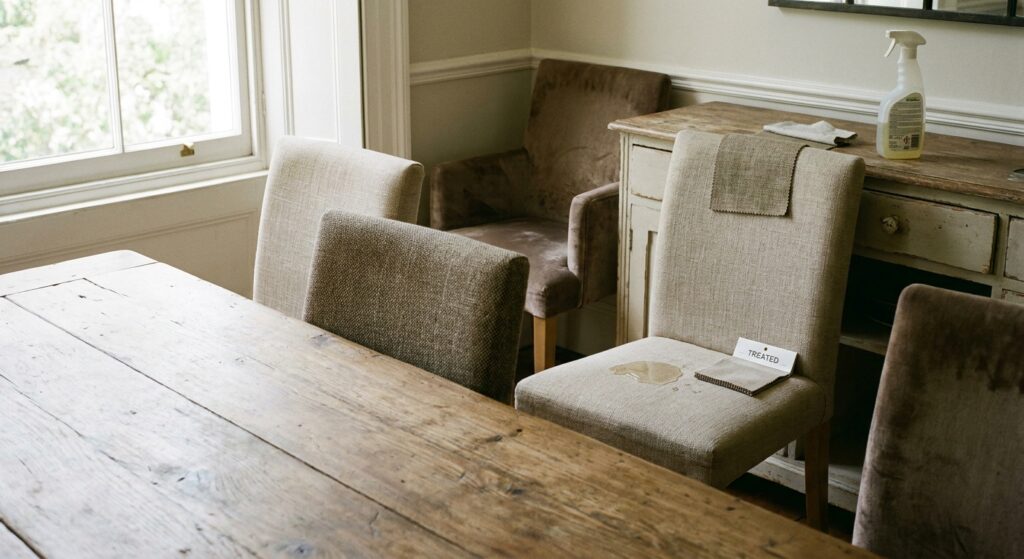
Selecting the right upholstery for dining areas requires balancing aesthetic appeal with practical cleaning requirements. Homeowners evaluating options for 3035perkinshouse.com often seek materials that can withstand daily meals without requiring constant professional extraction. Understanding the chemical treatments applied to textiles helps buyers predict long-term care costs. For buyers prioritizing fabric composition transparency, Sarelli Textiles provides detailed specifications for luxury fabrics. Modern chemical barriers alter how quickly liquids penetrate fibers, directly extending the time allowed before permanent discoloration occurs.
The evolution of stain repellent technologies
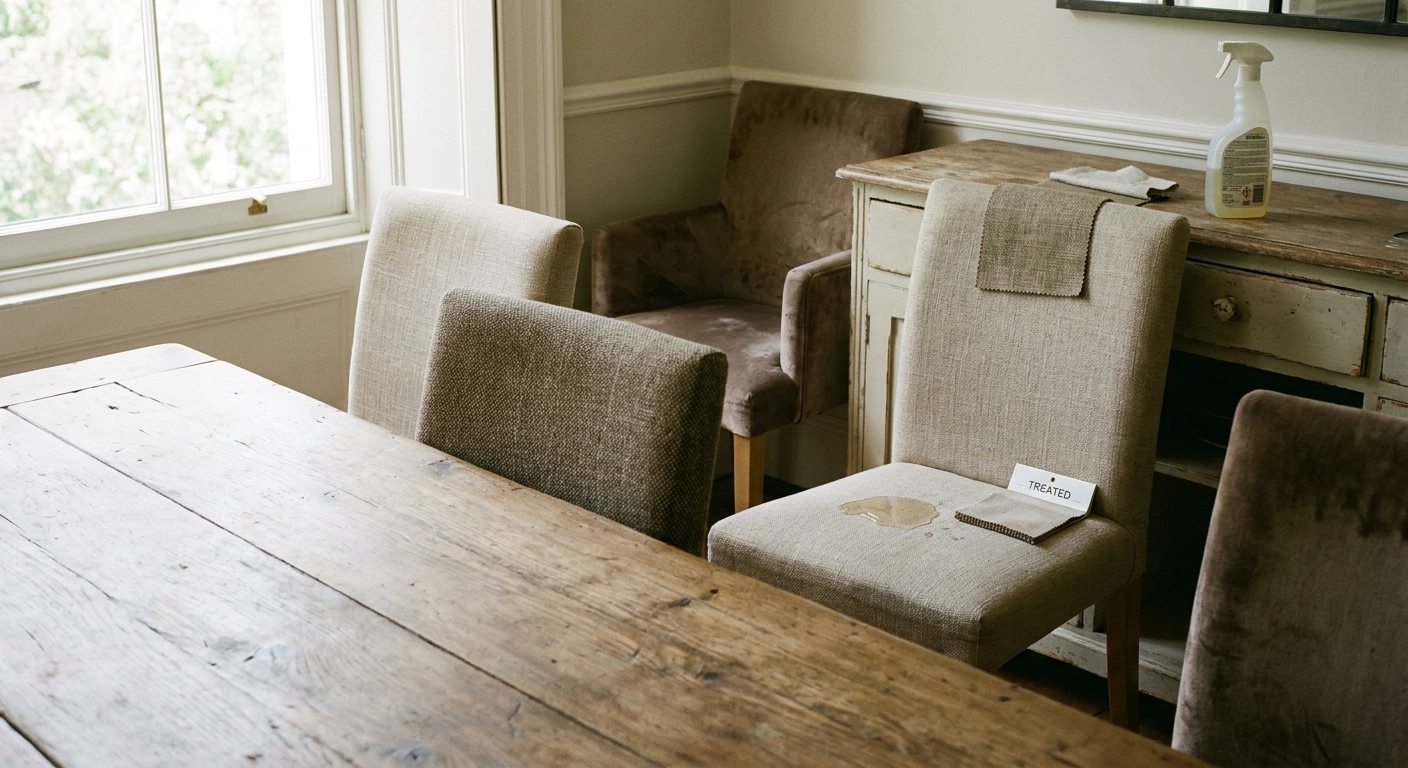
Chemical treatments applied during textile manufacturing fundamentally change how dining chair upholstery absorbs water-based and oil-based spills, allowing maintenance staff to shift from daily spot cleaning to monthly preventative care by lowering the surface energy of the fabric so that liquids bead on the surface rather than soaking into woven threads.
The history of commercial fabric protection began when 3M scientists Patsy Sherman and Samuel Smith accidentally discovered a fluorochemical polymer formula in 1953, an event that led to the introduction of Scotchgard in 1956. The original Scotchgard formula relied on perfluorooctanesulfonic acid, but 3M reformulated the product in June 2003 to replace perfluorooctanesulfonic acid with perfluorobutanesulfonic acid due to environmental concerns. Another major development occurred in 1993 when developers introduced Crypton, a patented fabric treatment that prevents stains and inhibits bacterial growth without using volatile organic compounds or formaldehyde. Crypton treatments create an integrated moisture barrier that prevents water-based liquids from penetrating the cushion beneath the upholstery.
How treated fabrics alter cleaning frequencies
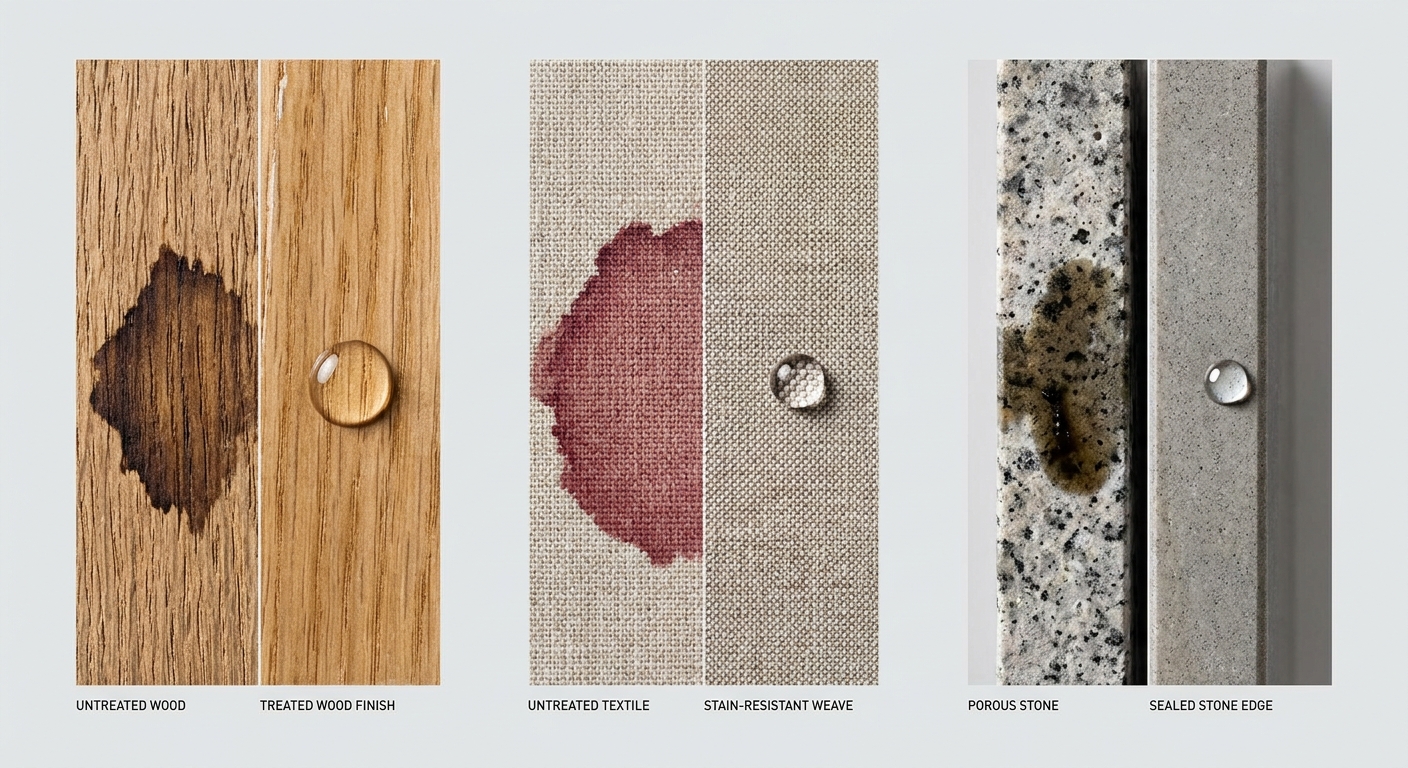
Applying durable water repellent finishes to dining chairs extends the required interval between professional hot water extraction treatments from 6 months to 18 months, because the hydrophobic coating prevents organic matter from bonding permanently with the underlying polyester or cotton fibers during normal daily usage.
Untreated natural fibers require immediate blotting within 3 minutes of a spill to prevent permanent discoloration. Conversely, textile performance enhancements like stain repellents provide a window of 15 to 30 minutes for users to wipe away liquids. Maintenance schedules for commercial dining rooms often mandate vacuuming treated chairs every 7 days to remove abrasive dust particles that can degrade the chemical finish over time. Facility managers must avoid using harsh solvents on treated chairs, as high-pH cleaners strip the protective fluoropolymers from the fabric.
Impact on standard dining chair dimensions and usage
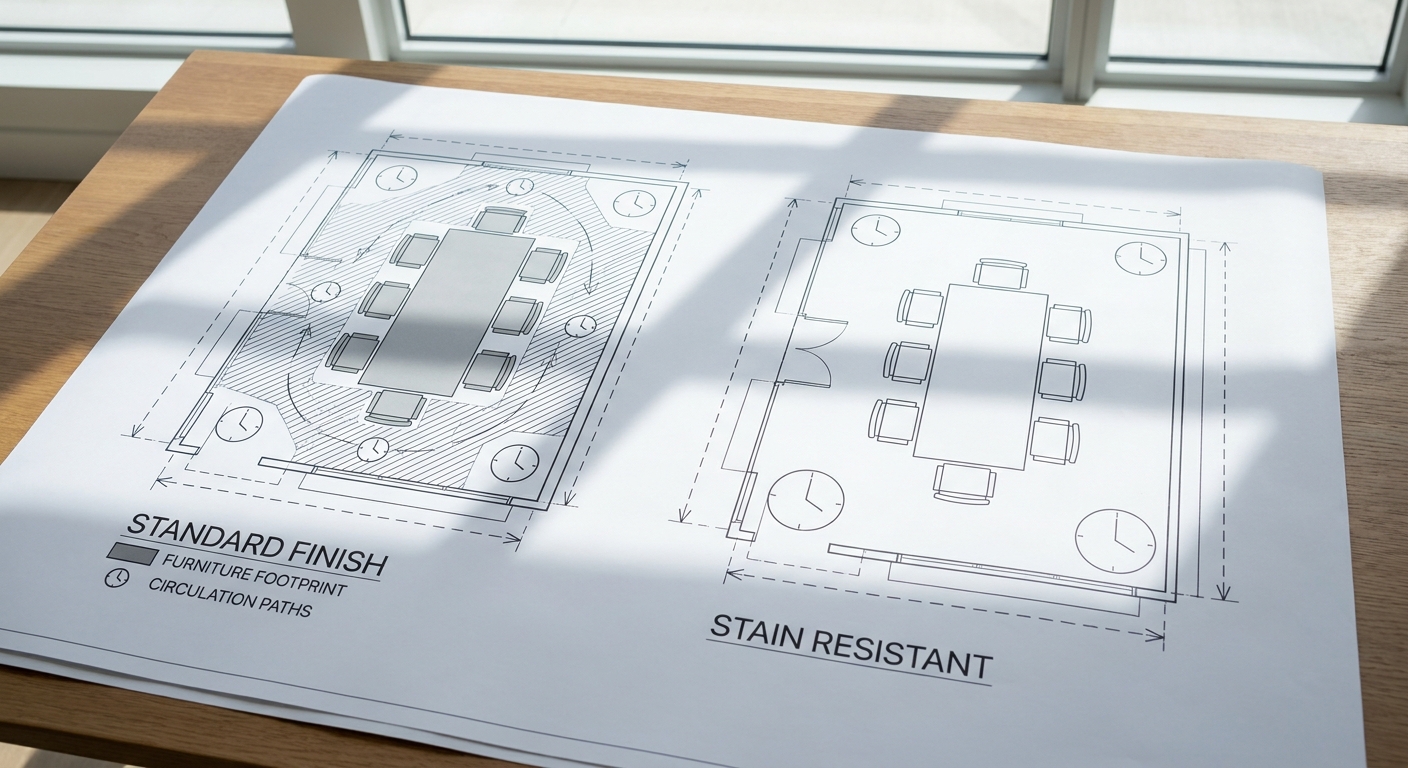
The physical dimensions of dining furniture directly influence how frequently spills occur. A standard place setting requires an area measuring 24 inches wide by 15 inches deep. When interior designers specify dining chairs with arms, the required space per person increases by 4 inches. Crowded tables force diners to sit closer together, a condition that increases the statistical probability of accidental spills. Standard dining chairs feature a seat height of 19 inches, placing the upholstery directly in the drop zone for food falling from a standard 30-inch high dining table. Selecting fabrics with integrated stain resistance becomes critical in high-density seating arrangements where physical proximity guarantees occasional accidents.
Environmental regulations and PFAS in upholstery
Federal environmental agencies now strictly regulate the manufacturing of stain resistant upholstery because per- and polyfluoroalkyl substances persist in the environment and accumulate in human tissue over time, forcing textile manufacturers to develop alternative chemical finishes that meet modern safety standards without sacrificing durability.

The United States Environmental Protection Agency actively monitors the use of per- and polyfluoroalkyl substances in household products. According to the Environmental Protection Agency, manufacturers historically applied the substances to carpets, upholstery, and clothing to create grease-resistant and water-repellent surfaces. Because per- and polyfluoroalkyl substances resist degradation from heat, oil, and water, the chemical compounds remain active in the environment long after the dining chairs reach a landfill. Modern textile producers now apply C4 fluorocarbons or entirely fluorine-free alternatives to comply with updated health guidelines. Buyers must verify that new dining chairs feature finishes free of perfluorooctanoic acid to ensure compliance with current environmental safety protocols.
Related reading on this site
Readers comparing planning rules can also review Interior Contemporary Design – What Dining Sets Are Still On The Actual Marketplace? for adjacent context on the same site.
Material and proportion decisions connect closely with Dining Room Design – 3 Steps To A Fantastic Dining Room, which gives readers another local reference point.
Project research can continue with Meet Our Team when the next question concerns a neighboring design topic.